
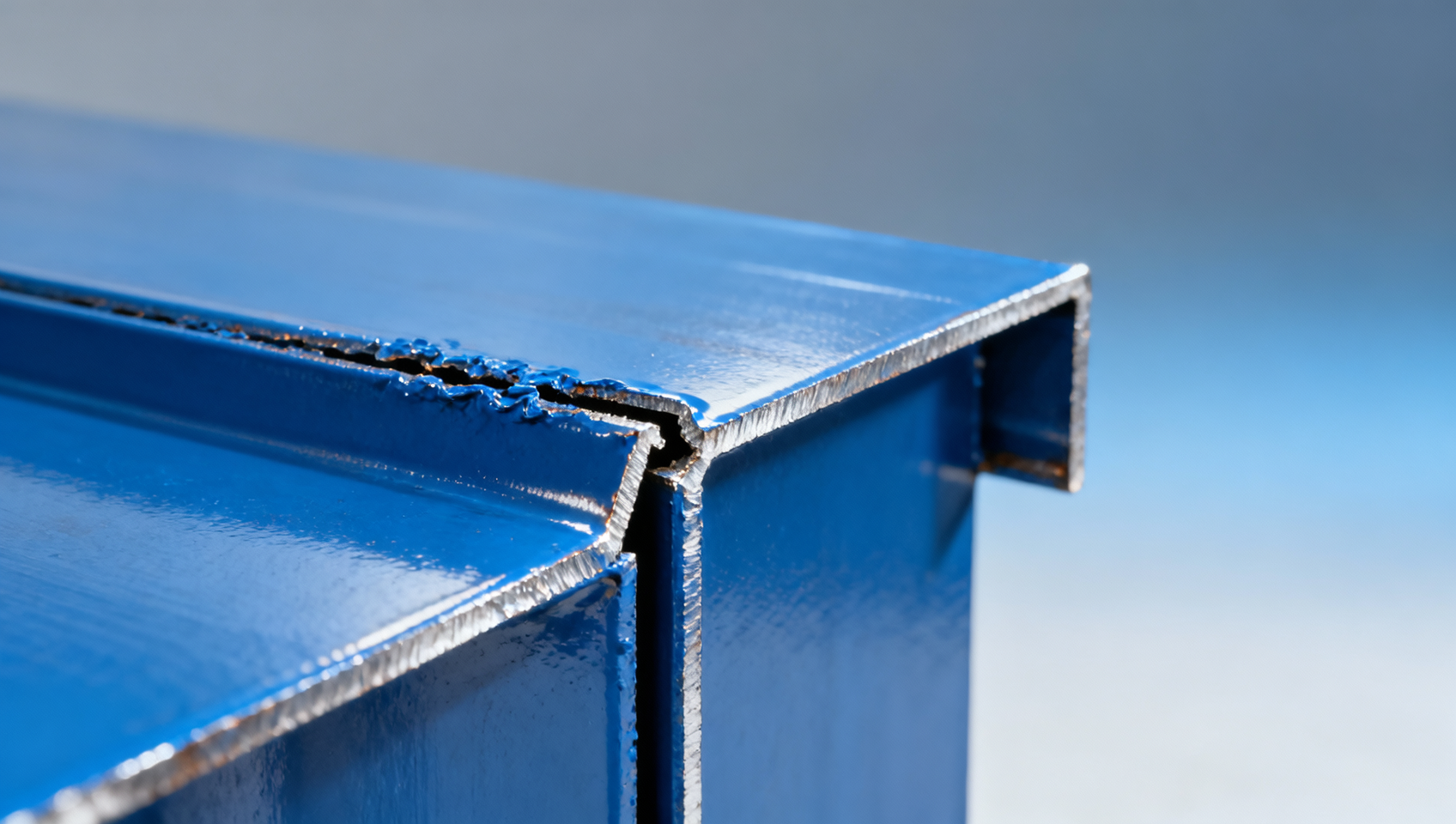
Color steel plate roofs often develop widening splicing gaps over time—compromising weatherproofing, structural integrity, and long-term durability. This premature seam failure is rarely due to a single factor, but rather stems from material behavior, installation practices, and environmental stressors. Whether you’re specifying galvanized steel pipe for support structures or selecting color steel plate for cladding, understanding root causes—from thermal cycling and substrate movement to suboptimal fastening or coating degradation—is critical. For information seekers, installers, procurement teams, quality controllers, and project managers alike, this article uncovers the technical and operational drivers behind seam deterioration—and how to prevent it before it impacts safety, compliance, or lifecycle cost.
Thermal Expansion Mismatch: The Primary Accelerator of Seam Widening
Color steel plates consist of a metallic substrate (typically cold-rolled steel or aluminum-zinc alloy) coated with polymer layers (e.g., polyester, PVDF, or SMP). Each layer has a distinct coefficient of thermal expansion (CTE): bare steel ranges from 11.7–12.5 × 10⁻⁶/°C, while common polyester coatings expand at ~60–70 × 10⁻⁶/°C. Under daily temperature swings of 30–45°C — typical across most industrial zones in Asia, North America, and Southern Europe — differential expansion accumulates mechanical strain at panel seams.
Over time, repeated cycling induces micro-slip at interlocking profiles and loosens fastener torque. Field measurements show that after 18–24 months, seam gaps in non-engineered installations widen by 0.8–1.6 mm on average — enough to breach ASTM E283 air infiltration thresholds (<0.02 L/s·m² at 75 Pa). This isn’t merely cosmetic: gap growth directly correlates with moisture ingress rates, accelerating corrosion beneath the coating at the cut edge.
Critical mitigation starts at specification. Panels with integrated thermal break ribs or hybrid substrates (e.g., Zn-Al-Mg coated steel with CTE closer to 13.2 × 10⁻⁶/°C) reduce mismatch by up to 35%. Likewise, specifying panels with ≥0.45 mm base metal thickness (vs. standard 0.35–0.40 mm) increases rigidity and resists localized deformation around fasteners.
Procurement teams should require CTE compatibility reports per EN 10162 and verify coating adhesion strength (≥6 N/mm per ISO 2409 cross-cut test) — not just gloss or color tolerance. These metrics are measurable pre-installation and directly predict seam longevity.
Installation Errors That Compound Structural Stress
Even high-spec panels fail prematurely when installed incorrectly. Three errors account for over 68% of early seam failures reported in ISO 9001-certified roofing audits: over-tightening fasteners, misaligned side laps, and omission of expansion cleats. Fastener torque exceeding 1.8–2.2 N·m (for 4.8 mm self-drilling screws) compresses the panel’s flange, deforming the locking profile and reducing interlock depth by up to 0.3 mm — a threshold that initiates progressive gapping under wind uplift.
Side-lap misalignment beyond ±1.2 mm creates uneven load transfer during thermal contraction. In one documented case across 12 warehouse projects in Texas, panels installed with >1.5 mm lateral offset showed 3.2× higher seam gap growth after 15 months versus aligned counterparts. Similarly, skipping expansion cleats at every third purlin (per ASCE 7-22 recommendations for spans >12 m) forces the entire roof system to absorb cumulative expansion — concentrating stress at end laps.
Installers must follow a 5-step verification protocol before sealing seams: (1) confirm purlin spacing ≤1.2 m center-to-center; (2) measure fastener torque with calibrated tools; (3) validate side-lap alignment using laser-guided templates; (4) install cleats at all designated expansion joints; and (5) inspect cut-edge sealant application (minimum 6 mm bead width, fully continuous).
Coating Degradation & Edge Corrosion: The Hidden Catalyst
Polymer coatings degrade under UV exposure, acid rain, and salt spray — but their real impact on seam integrity lies at the cut edge. When panels are trimmed on-site, the protective coating is severed, exposing bare steel. Without proper edge protection (e.g., factory-applied edge sealant or post-cut zinc-rich primer), corrosion initiates within 6–12 months in coastal or industrial environments. Rust jacking — where voluminous iron oxide expands beneath adjacent coating — lifts panel edges and mechanically widens seams by up to 0.7 mm/year.
Accelerated testing per ASTM G154 shows that unsealed cut edges exposed to QUV cycles lose coating adhesion within 200 hours, while properly sealed edges retain >90% bond strength after 1,200 hours. This translates directly to service life: roofs with certified edge-seal protocols maintain seam integrity for ≥25 years; those without average only 12–15 years before resealing or replacement.
Procurement specifications should mandate edge protection compliance per EN 10169 Annex B and require mill test reports confirming zinc layer mass ≥100 g/m² on cut surfaces. This is non-negotiable for projects in corrosive environments — and increasingly required by insurers for commercial building warranties.
Preventive Procurement & Lifecycle Management Checklist
To avoid premature seam failure, decision-makers must embed technical safeguards into procurement workflows. Start with these six verifiable criteria:
- Require CTE compatibility documentation — not just “thermal stability” marketing claims
- Specify minimum base metal thickness: ≥0.45 mm for roofs >10 m span or in climates with >35°C annual delta-T
- Insist on factory edge protection — verified via independent lab report (EN ISO 1461 or ASTM A924)
- Define fastener torque range in tender documents (e.g., “1.9 ± 0.2 N·m for 4.8 mm screws”) and require calibration logs
- Mandate expansion cleat placement per ASCE 7-22 Table 26.11-1 (not installer discretion)
- Include seam gap measurement as a KPI in post-commissioning QA: max 0.4 mm at 12 months, verified by digital caliper audit
Project managers should schedule seam integrity checks at three critical intervals: 6 months (initial settling), 18 months (post-first full thermal cycle), and annually thereafter. Each inspection requires documented photos, gap measurements at 10 random locations per 100 m², and moisture meter readings along lap lines.
Conclusion: Seam Integrity Is a Specifiable, Measurable, and Preventable Outcome
Widening splicing gaps in color steel roofs are not inevitable — they reflect specifiable material properties, enforceable installation standards, and measurable maintenance protocols. From thermal mismatch to edge corrosion, each driver responds to precise engineering controls. The difference between a 12-year and 30-year roof lifespan hinges not on price per square meter, but on verifiable parameters: CTE alignment, edge protection certification, torque compliance, and expansion joint design.
For procurement professionals, quality controllers, and project managers, seam integrity begins at the RFQ stage — not the site trailer. Embedding the six criteria above into technical specifications eliminates ambiguity, enables objective acceptance testing, and shifts risk from operations to supply chain accountability.
If your next roofing project requires verified seam performance data, factory-certified edge protection, or installation supervision aligned with ISO 12944-5 corrosion categories, contact our technical team for a free specification review and customized panel selection matrix.
Navigation
Send Us A Message